Dr. Angela Graefen - Bioarchaeology - Palaeopathology - Palaeogenetics
Bioarchaeological research experience centred on palaeopathology,
palaeogenetics, and mummy studies. Biological and medical perspectives
provide a framework for examining disease, health, and mortality in
prehistoric and historic populations and individuals, informed by
archaeological, biological, and historical evidence.
New insights into the Tyrolean Iceman’s origin and phenotype as inferred by whole-genome sequencing
Nature Communications 3, 1701
Andreas Keller,*Angela Graefen,*
Markus Ball,*
Mark Matzas, Valesca Boisguerin, Frank Maixner, Petra Leidinger,
Christina Backes, Rabab Khairat, Michael Forster, Björn Stade,
Andre Franke, Jens Mayer, Jessica Spangler, Stephen McLaughlin,
Minita Shah, Clarence Lee, Timothy Harkins, Alexander Sartori,
Andres Moreno-Estrada, Brenna Henn, Martin Sikora, Ornella Semino,
Jacques Chiaroni, Siiri Rootsi, Natalie Myres, Vicente Cabrera,
Peter Underhill, Carlos Bustamante, Eduard Egarter Vigl,
Marco Samadelli, Giovanna Cipollini, Jan Haas, Hugo Katus,
Brian O’Connor, Marc Carlson, Benjamin Meder, Nikolaus Blin,
Eckart Meese, Carsten Pusch & Albert Zink (2012).
*
Equal contribution as first authors.
Abstract
The Tyrolean Iceman, a 5,300-year-old Copper Age individual, was discovered in 1991
on the Tisenjoch Pass in the Italian part of the Ötztal Alps. Here we report the
complete genome sequence of the Iceman and show 100% concordance between the
previously reported mitochondrial genome sequence and the consensus sequence
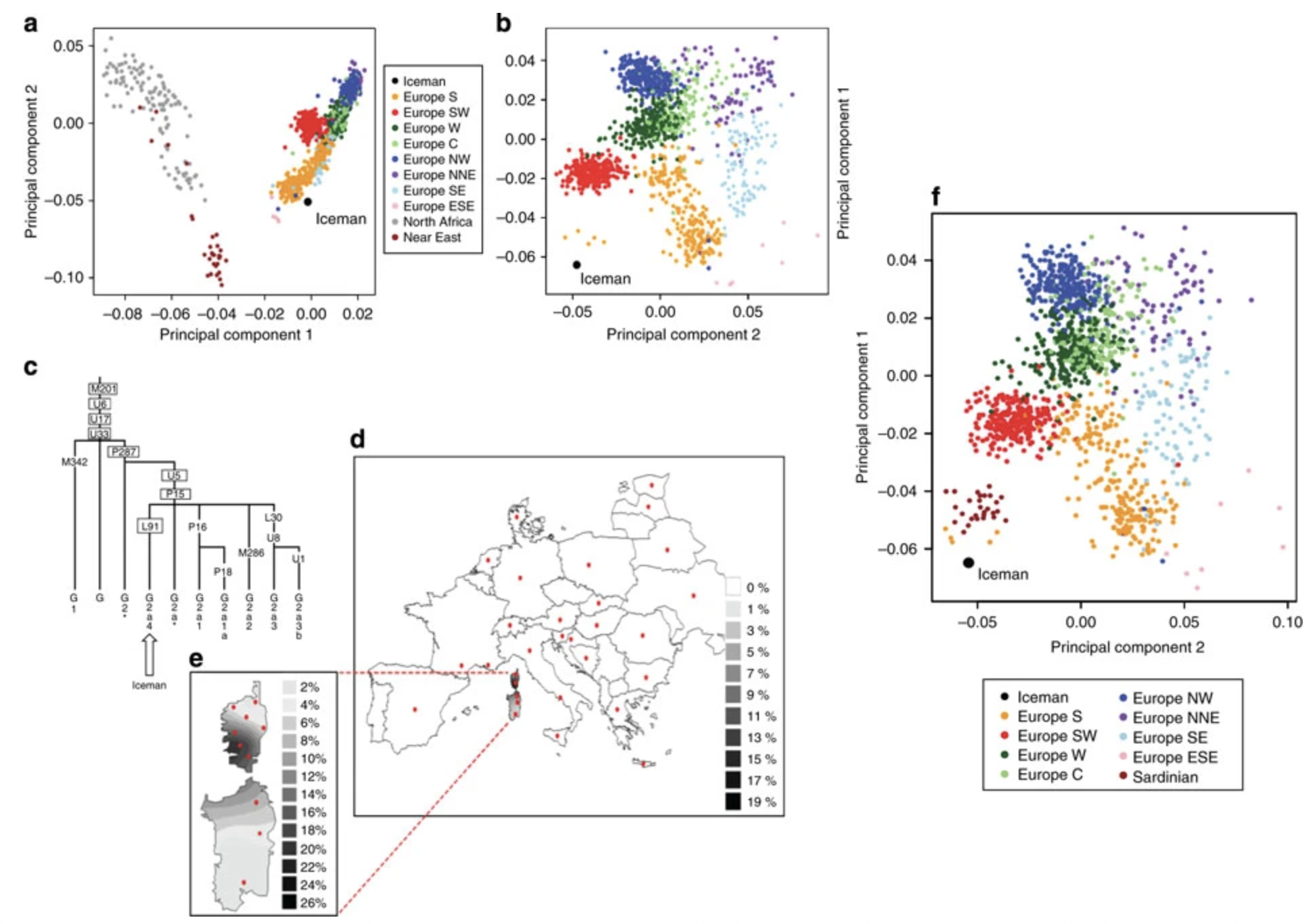
generated from our genomic data. We present indications for recent common ancestry
between the Iceman and present-day inhabitants of the Tyrrhenian Sea, that the
Iceman probably had brown eyes, belonged to blood group O and was lactose intolerant.
His genetic predisposition shows an increased risk for coronary heart disease and
may have contributed to the development of previously reported vascular
calcifications. Sequences corresponding to ∼60% of the genome of
Borrelia burgdorferi are indicative of the earliest human case of infection
with the pathogen for Lyme borreliosis.
Paul Gostner, Peter Pernter, Guido Bonatti,
Angela Graefen,
Albert R. Zink (2011).
Abstract
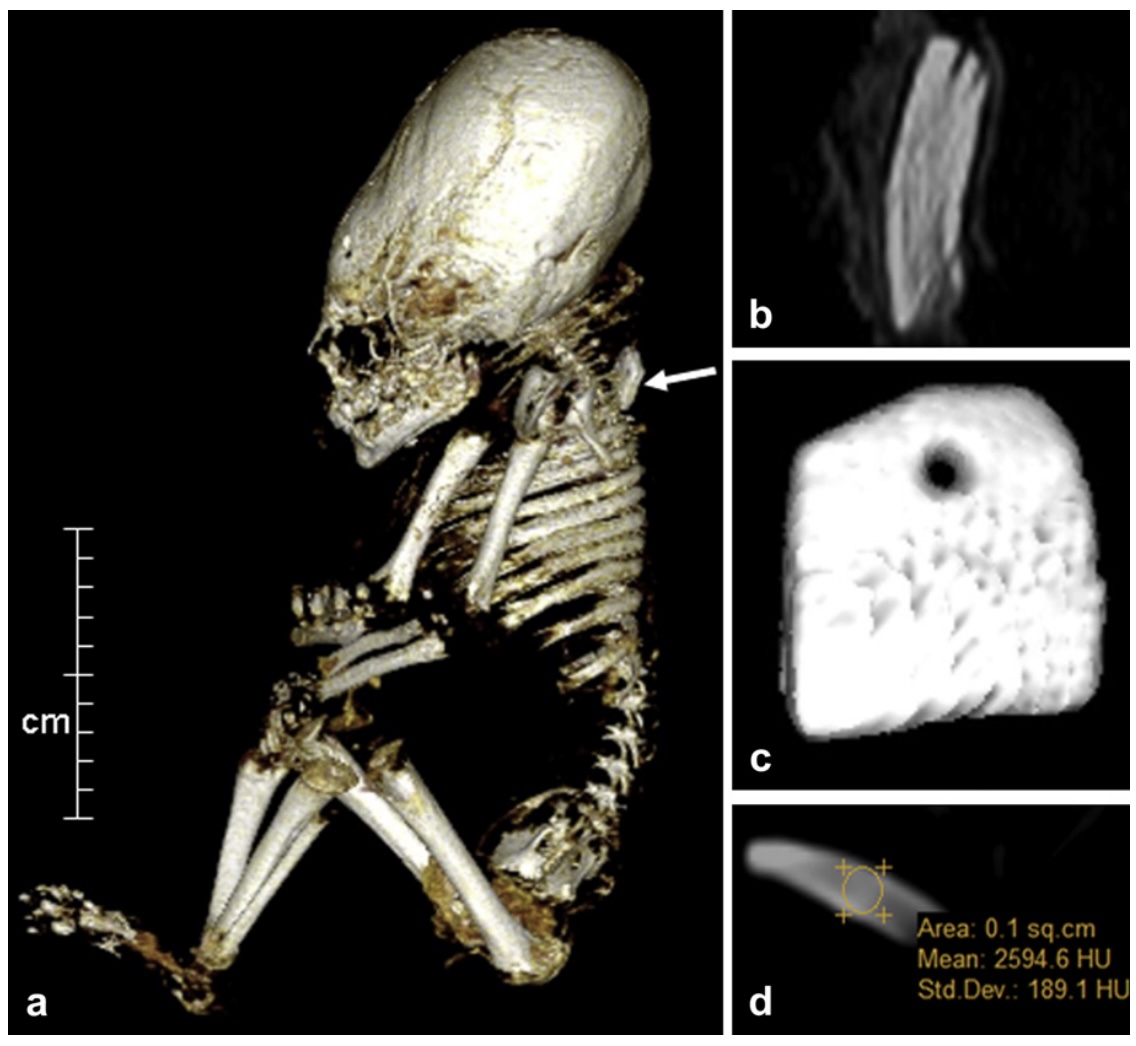
The radiological examinations carried out on the Tyrolean Iceman (5300 B.P.) in Bolzano between 2001 and 2006 have undergone a new, systematic re-appraisal, during which new findings have been added to those already known beforehand. Until now, it has been assumed that the Iceman’s stomach was empty (due to the fact that this organ could not be localised), the colon contents constituting the Iceman’s last meal. During this re-appraisal, however, the stomach could not only be exactly identified, but was also found to be well-filled, shedding new light on the scenario leading to his violent death. In addition, several other novel aspects were observed: three gallbladder stones were found which, in combination with the previously identified atherosclerosis, indicate that the Iceman’s diet may have been richer in animal products than previous studies have suggested. The signs of enthesopathy in the knees indicate that he spent many hours wandering in the mountains. Several radio-opaque objects superficially embedded within the soft tissue were identified as being of taphonomic origin. The right humerus was found to be postmortally fractured.
Paul Gostner, Michael Bonelli, Peter Pernter,
Angela Graefen,
Albert R. Zink (2013).
Abstract
Traditional x-ray images of mummies may reveal foreign objects lodged within the body or its wrappings, but can only give a vague idea of the material of which these objects consist. More precise information may be obtained by means of computed tomography which delivers not only a three-dimensional reconstruction of the object's shape, but also a measurement of radiodensity and a representation of the radiological structure.
While the density values and structures of body tissues and substances are well documented in radiological publications, little data exist of material not usually found in the human body. The aim of this study is to analyse the radiological density and structure of a series of test objects, so that these may serve as a reference for comparison with potential foreign objects found in mummified remains. Value and limitations of this method are discussed and the practical application is demonstrated through four examples.
Albert Zink,
Angela Graefen,
Klaus Oeggl, James Dickson, Walter Leitner, Günther Kaufmann,
Angelika Fleckinger, Paul Gostner & Eduard Egarter-Vigl (2011).
Abstract
Vanzetti et al. (2010) recently advanced the hypothesis that the complex assemblage
of the Tyrolean Iceman represented an intentional, ceremonial burial, as opposed to
his having suffered accidental or violent death in the high alpine area, and his
body having then naturally mummified in the conditions of the local environment.
This hypothesis was mainly based, on the one hand, on the spatial distribution of
the find complex, and on the other, on previously published pollen analyses, which
(in the opinion of Vanzetti et al.) point towards a time-span of several months
between death and subsequent placement of the body at the Tisenjoch pass. Although
the initial theory that the find complex was re-distributed after death concurs
with existing theories, the conclusions drawn from this observation by Vanzetti
et al. disregard several important factors. In our opinion, neither the distribution
of objects nor the palaeobotanical data support a ‘burial hypothesis’, and the
forensic-pathological data actually contradicts the scenario put forward by
Vanzetti et al. They also describe several archaeohistorical parallels (grave goods,
burial traditions) as supporting the burial hypothesis; however, these arguments are
unconvincing when analysed more closely.
Angela Graefen,
Martina Unterländer, Hermann Parzinger, Joachim Burger (2009).
Abstract
Next-generation high-throughput techniques, which allow an enormous amount of
genetic material to be sequenced within a relatively short time, are becoming
increasingly popular within the field of palaeogenetics. In recent years, these
techniques have enabled large-scale projects such as the sequencing of entire
mitochondrial genomes of the Neanderthal and the woolly mammoth, which would
hardly have been possible with standard PCR. However, the high running costs of
next-generation technology necessitate a careful sample selection. Whilst DNA
damages are continually repaired in the living, healthy organism, various factors
such as endogenous processes, environmental influence and soil composition cause
increasing degradation of the DNA after death. Due to the high copy number per
cell, mitochondrial DNA can often be extracted and sequenced. On the other hand,
nuclear DNA with only two copies per cell, or Y-chromosomal DNA with only a single
copy per cell in the male individual, tends to be much more difficult to amplify
successfully. To estimate the quantitative and qualitative aDNA preservation
status for specific samples, a multiplex PCR was developed, allowing multiple
segments of varying sizes from nuclear and mitochondrial genome to be amplified
in one run and thus providing information on the degree of strand damage. This way,
the expected success rate of next-generation sequencing of a given sample can be
determined beforehand, increasing the cost-effectiveness of such methods by only
using promising sample material. The multiplex PCR was developed and tested on
Iron Age skeletons from East Kazakhstan and the Altai within the scope of the
project “Palaeogenetic analyses of economic advances and social mobility within
the Eurasian Steppe 3500–300 B.C.”.
Angela Graefen,
Dario Piombino-Mascali,
Paul Gostner,
Albert R. Zink (2009).
Abstract
The diagnosis and analysis of neoplasms in historic and prehistoric human bone remains remains a challenging task
in palaeopathology. Definite morphological signs, whether as primary tumours or metastases, are rare compared with
many other pathological conditions, and reports of ancient cancer cases remain infrequent. This, however, should
not be interpreted as evidence for a low prevalence of neoplasms in past populations, as the absence of effective
treatments would often have resulted in death before skeletal metastasis occurred. Furthermore, metastatic lesions
may easily be confused with taphonomic damage if not carefully analysed. Most diagnostic methods used in modern clinical practice are of limited applicability in palaeopathology, which
relies primarily on morphological, radiological, endoscopic, and more rarely biochemical analyses. As an example,
we present a skull from an Early Medieval site in South Tyrol. Osteolytic lesions of the cranial vault, initially
resembling mechanical damage, were diagnosed as carcinoma metastases following detailed macromorphological and
radiological examination. A further focus is the potential application of ancient DNA analysis to confirm suspected tumour cases. To date,
no such experiments have been reported. The increasing use of next-generation sequencing in palaeopathology,
combined with developments in modern oncology and the Cancer Genome Project, may provide new insights into the
palaeoepidemiology of neoplastic disease and contribute to a better understanding of cancer pathogenesis in modern
populations.
Conference Presentations
Next Generation Sequencing Technology in Mummy Studies: The Genome of the Tyrolean Iceman
7th World Congress on Mummy Studies, San Diego, 12.–16. June 2011
Presented by Angela Graefen.
Angela Graefen, Andreas Keller, Markus Ball,
Mark Matzas, Valesca Boisguerin, Frank Maixner, Petra Leidinger,
Andre Franke, Jens Mayer, Rabab Khairat, Jessica Spangler,
Stephen McLaughlin, Minita Shah, Clarence Lee, Timothy Harkins,
Alexander Sartori, Jan Haas, Hugo Katus, Benjamin Meder,
Nikolaus Blin, Eckart Meese, Carsten Pusch, Marco Samadelli,
Eduard Egarter Vigl & Albert Zink (2011).
Abstract
The Tyrolean Iceman represents one of the most valuable biological archives available for the study of ancient human genetics. This presentation describes the application of next-generation sequencing technologies to overcome the limitations of conventional PCR-based approaches when analyzing highly fragmented ancient DNA. Using SOLiD4 sequencing, a high-coverage draft of the Iceman’s nuclear genome was generated from minimal bone material, achieving broad genome coverage and reliable authentication through characteristic ancient DNA damage patterns and independent verification. Comprehensive bioinformatic analyses enabled the identification of millions of single nucleotide polymorphisms, determination of mitochondrial and Y-chromosomal haplogroups, and the exploration of phenotypically and clinically relevant genetic variants. In addition, metagenomic analysis provided insight into non-human DNA present in the sample. These results demonstrate the transformative potential of next-generation sequencing in mummy studies and establish the Iceman’s genome as a long-term resource for interdisciplinary palaeogenomic research.
Experimental Human Ice Mummification for Conservation and Taphonomic Studies
7th World Congress on Mummy Studies, San Diego, 12.–16. June 2011
Presented by Angela Graefen.
Eduard Egarter Vigl, Angela Graefen,
Marco Samadelli, Frank Maixner, Astrid Grumer & Albert Zink (2011).
Abstract
The long-term conservation of the Tyrolean Iceman has posed unique challenges,
requiring a careful balance between optimal cold preservation and public display.
To investigate alternative conservation strategies and improve understanding of
taphonomic processes, an experimental human ice mummification project was
initiated. A donated human body (“Ö3”) was preserved using chemical fixation and
stored under controlled subzero temperature and high-humidity conditions designed
to minimize dehydration. Despite stable environmental parameters, significant
tissue shrinkage and limitations related to formaldehyde fixation were observed,
restricting the range of histological, genetic, and radiological investigations.
The experiment highlights both the potential and the constraints of using
artificially preserved human mummies for conservation research and underscores
the ethical, legal, and methodological challenges inherent in experimental human
mummification studies.
Analysis of Ancient Mummy DNA – Problems and Perspectives
7th World Congress on Mummy Studies, San Diego, 12.-16. June 2011
Presented by Albert Zink.
Albert Zink, Angela Graefen, Christian Mitterer
& Frank Maixner (2011).
Microscopic and Molecular de novo Analysis of the Iceman’s Stomach Content
7th World Congress on Mummy Studies, San Diego, 12.–16. June 2011
Presented by Frank Maixner.
Frank Maixner, Angela Graefen, Paul Gostner,
Dario Piombino-Mascali, Marco Samadelli & Albert Zink (2011).
Stones from the Stone Age: Cholelithiasis in the Tyrolean Iceman
18th European Meeting of the Paleopathology Association, Vienna, Austria, 23.–26. August 2010
Presented by Angela Graefen.
Paul Gostner, Angela Graefen, Peter Pernter,
Guido Bonatti, Albert R. Zink (2010).
Abstract
Cholelithiasis has been documented in ancient populations primarily through the
study of mummified remains, yet detailed characterization has often been limited by
preservation and technology. This study presents a radiological re-evaluation of
the Tyrolean Iceman (Ötzi) using modern multislice computed tomography, integrating
data from earlier CT examinations with advanced post-processing techniques. Three
small, round calcified objects consistent with gallstones were identified within
the gallbladder region. Density measurements and morphologic criteria suggest a
predominantly mixed gallstone composition. Although gallstones are frequently
asymptomatic, their presence provides valuable insight into the Iceman’s metabolic
status, dietary habits, and possible genetic predispositions. These findings
contribute to the growing field of palaeopathology and highlight the role of modern
imaging in refining diagnoses in ancient human remains.
Perspectives of palaeo-oncology, illustrated by a rare case of metastasing carcinoma from Northern Italy
8th International Congress of the German Society for Anthropology, Munich, 14.–18. September 2009
Presented by Angela Graefen.
Angela Graefen, Dario Piombino-Mascali,
Paul Gostner & Albert R. Zink (2009).
Abstract
Palaeo-oncology offers a unique perspective on the antiquity, prevalence, and
biological behavior of malignant disease in past populations. This presentation
examines a rare case of metastatic carcinoma identified in human skeletal remains
from Northern Italy, using macroscopic and radiological criteria to differentiate
metastatic disease from multiple myeloma and other differential diagnoses. The
distribution, morphology, and remodeling patterns of the lesions support a
diagnosis of metastatic carcinoma, although identification of the primary tumor
remains challenging. Beyond this case study, the presentation discusses the
broader implications for palaeo-oncology, including the role of life expectancy
in cancer development and the potential contribution of ancient DNA analyses to
the study of hereditary cancer predisposition and tumor-related genetic
alterations. While methodological limitations remain substantial, integrating
imaging, morphology, and molecular approaches may transform palaeo-oncology from
a discipline reliant on chance discoveries into a systematic tool for
reconstructing cancer epidemiology and tumor evolution in ancient populations.
Mummification Techniques in Iron Age Central Asia
Poster presentation, 1st Bolzano Mummy Congress: Mummies and Life Sciences, Bolzano, Italy, 19th-21th March 2009
Angela Graefen (2009).
A rare case of metastasing carcinoma from an early medieval skeleton from Northern Italy
Paper, International Congress on Biomedical Sciences in Archaeology, Heraklion, Crete, 24.-26. September 2008
Angela Graefen, Dario Piombino-Mascali,
Paul Gostner & Albert R. Zink (2008).
Bioethical and conservational aspects in ancient DNA studies
Paper, 6th World Archaeological Congress, Dublin, Ireland, 29th June - 4th July 2008
Angela Graefen & Joachim Burger (2008).
The pathology reference series "Galler collection" (part 2): Paleopathological significance and digital recording
Paper (presenter F. J. Rühli), 77th annual meeting of the American Association of Physical Anthropologists, Columbus, Ohio, USA, 9th-12th April 2008
Regula Schiess, Angela Graefen, G. Kuhn,
Mané Hofmann & Frank J. Rühli (2008).
Modern Mummies for Modern Museums - Treading the Fine Line between Education and Exhibitionism
Poster, Symposium "Mumien und Museum", Reiss-Engelhorn-Museum Mannheim, Germany, 7.-9- February 2008
Angela Graefen & Michael Wuttke (2008).
Book Chapters
Mummification today - A very normal affair
In: Alfried Wieczorek, Wilfried Rosendahl (Eds.), Mummies of the World
2010, pp. 181-188.
Accompanying volume to the exhibition “Mummies of the World”, various venues in the
United States, 2010-2013.
ISBN 978-3-7913-5030-0.
Angela Graefen & Kurt W. Alt.
Mumifizierung heute - Eine ganz normale Angelegenheit
In: Wieczorek A., Rosendahl W. and Tellenbach M. (Eds.), Mumien - Der Traum vom ewigen Leben
Mainz 2007, pp. 181-188.
Accompanying volume to the exhibition “Mummies - The Dream of Everlasting Life”,
Reiss-Engelhorn Museum Mannheim, 30.9.2007 - 24.3.2008.
ISBN 978-3-8053-3779-3.
Angela Graefen & Kurt W. Alt (2007).
Academic Theses
Population genetic analysis of Neolithic to Bronze Age human remains from Trentino-Alto Adige (Northern Italy)
Doctoral thesis – PhD Natural Sciences (Dr. rer. nat.)
Institute for Organismic and Molecular Evolutionary Biology (iomE)
Faculty of Biology
Johannes Gutenberg University Mainz, Germany
In the present population genetic study, 76 prehistoric individuals (8 Neolithic, 30 Copper Age, and 38 Bronze Age) from 12 archaeological sites in South Tyrol-Trentino were investigated using paleogenetic methods. The loci examined included HVR1 (hypervariable region I) and position 12308 of the mitochondrial genome, the amelogenin locus for sex determination, the SNPs (single nucleotide polymorphisms) rs12913832 (HERC2 gene, discrimination between brown and blue eye color) and rs4988235 (MCM6 gene, -13.910*C/T; lactase persistence), as well as various SNPs on the Y chromosome for the determination of paternal lineages. The DNA data were compared with prehistoric and modern reference populations. The aim of the study was a population-historical analysis of the prehistoric population of South Tyrol-Trentino. In particular, it addressed whether this population showed predominantly Mesolithic lineages or whether its roots lay in immigrating Neolithic farmers and livestock breeders. For the Early Bronze Age, the study also sought to clarify the extent to which the Copper Age-Bronze Age expansion originating in the Pontic Steppe left genetic traces in South Tyrol. In addition, the prehistoric groups from South Tyrol-Trentino were compared with the Iceman ("Otzi") and with modern populations from the same region. During sample preparation and analysis, strict anti-contamination measures were observed to prevent contamination with modern DNA or cross-contamination with other samples. In total, mitochondrial DNA was successfully sequenced from 59 individuals and nuclear DNA from 36 individuals. Since second extractions were not available for all samples and replication of results in another laboratory was not always possible, a scoring system was established (based on sequence quality, number of PCRs and extracts, and replication in another laboratory) to assess the reliability of the respective results. Thirty-seven individuals yielded mitochondrial sequences with a sufficient score and could therefore be used for statistical analyses. Mitochondrial lineages associated with the Mesolithic population of Europe were present only at low frequencies. Overall, the observed haplotype spectrum more closely resembles that of Early Neolithic groups from Central and Southeastern Europe than that of Mediterranean populations. This finding is consistent with a Neolithization of South Tyrol-Trentino in the context of the Danubian expansion. While the Copper Age group resembled Neolithic reference populations, the Bronze Age sample was more similar to prehistoric populations associated with the Pontic Steppe. The fact that some rare haplotypes were found not only in prehistoric samples but also in modern populations of South Tyrol-Trentino nevertheless indicates a certain degree of continuity since the Copper Age. Whereas Y-chromosomal lineages were largely replaced during the Bronze Age in Central and Northern Europe, Neolithic Y lineages persisted in South Tyrol-Trentino until the second half of the 3rd millennium BCE. Direct kinship with the Iceman could not be demonstrated.
Zusammenfassung (Deutsch)
Bei der vorliegenden populationsgenetischen Studie wurden 76 prähistorische Individuen (8 Neolithikum, 30 Kupferzeit und 38 Bronzezeit) von 12 Fundorten in Südtirol und Trentino paläogenetisch untersucht. Die untersuchten loci umfassten die HVR1 (hypervariable Region I) sowie Position 12308 des mitochondrialen Genoms, den Amelogenin-locus zur Bestimmung des Geschlechts, die SNPs (single nucleotide polymorphisms) rs12913832 (HERC2 Gen, Unterscheidung zwischen brauner/blauer Augenfarbe) und rs4988235 (MCM6 Gen, 13.910*C/T; Laktasepersistenz), sowie verschiedene SNPs auf dem Y Chromosom zur Bestimmung väterlicher Linien. Die DNA-Daten wurden mit prähistorischen und modernen Referenzpopulationen verglichen. Ziel der Studie war eine populationsgeschichtliche Analyse der prähistorischen Bevölkerung Südtirol Trentinos. So wurde der Frage nachgegangen, ob diese eher mesolithische Linien zeigt oder ihre Wurzeln in den eingewanderten neolithischen Ackerbauern und Viehzüchtern hatte. Für die frühe Bronzezeit sollte zudem geklärt werden, in welchem Umfang die kupferzeitliche/bronzezeitliche Expansion, die in der pontischen Steppe ihren Ursprung hatte, in Südtirol genetische Spuren hinterlassen hat. Außerdem wurden die prähistorischen Gruppen aus Südtirol-Trentino mit dem Mann aus dem Eis („Ötzi“) und mit modernen Populationen aus dem gleichen Gebiet verglichen.
Bei der Probenaufbereitung und analyse wurden strenge Antikontaminationsmaßnahmen beachtet, um eine Verunreinigung mit moderner DNA oder Kreuzkontamination mit anderen Proben zu vermeiden. Insgesamt konnte von 59 Individuen mitochondriale und von 36 nukleäre DNA sequenziert werden. Da Zweitextrakte nicht für alle Proben vorlagen bzw. Replikation der Ergebnisse in einem anderen Labor nicht in jedem Fall möglich war, wurde ein scoring System etabliert (basierend auf Sequenzqualität, Anzahl der PCRs und Extrakte sowie Replikation in einem anderen Labor) um die Reliabilität der jeweiligen Ergebnisse festzustellen. 37 Individuen zeigten mitochondriale Sequenzen mit ausreichendem score und konnten somit für die statistischen Analysen verwendet werden.
Mitochondriale Linien, die mit der mesolithischen Bevölkerung Europas assoziiert werden, lagen in nur geringer Häufigkeit vor. Insgesamt gleicht das beobachtete Haplotypenspektrum eher demjenigen frühneolithischer Gruppen aus Mittel- bzw. Südosteuropa als aus dem Mittelmeerraum. Dieser Befund ist konsistent mit einer Neolithisierung von Südtirol-Trentino im Zusammenhang mit der danubischen Expansion. Während die kupferzeitliche Gruppe neolithischen Referenzpopulationen ähnelte, glich die bronzezeitliche Stichprobe eher prähistorischen Populationen mit Bezug zur pontischen Steppe. Die Tatsache, dass einige seltene Haplotypen nicht nur in den prähistorischen Proben, sondern auch in modernen Populationen Südtirol-Trentinos gefunden wurden, spricht jedoch auch für einen gewissen Grad an Kontinuität seit der Kupferzeit. Während Y-chromosomale Linien im Laufe der Bronzezeit in Mittel- und Nordeuropa weitegehend ersetzt werden, persistieren neolithische Y-Linien in Südtirol-Trentino bis in die zweite Hälfte des 3. vorchristlichen Jahrtausends. Direkte Verwandtschaft mit dem Mann aus dem Eis konnte nicht nachgewiesen werden.
Riassunto (Italiano)
In questo studio sulla genetica delle popolazioni del Trentino-Alto Adige sono stati esaminati 76 individui preistorici (8 del Neolitico, 30 dell’Età del Rame e 38 dell’Età del Bronzo) provenienti da 12 siti. Sono stati caratterizzati i seguenti loci e polimorfismi genetici: il locus HVR1 (hypervariable region, regione ipervariabile I) e la posizione 12308 del genoma mitocondriale (mtDNA, determinazione origine materna); il locus amelogenina (determinazione del sesso); il polimorfismo a singolo nucleotide, SNP rs12913832 (gene HERC2, per la determinazione del colore degli occhi); lo SNP rs4988235 (gene MCM6, 13.910*T, persistenza della lattasi; capacità di digerire il lattosio oltre l'infanzia) e vari altri SNPs sul cromosoma Y per la determinazione dell'origine paterna. I risultati sono stati confrontati con delle popolazioni di riferimento, sia preistoriche che moderne. Gli obiettivi del presente studio (sulla base di loci mitocondriali, nucleari e Y-cromosomali) erano di: 1) comprendere, ad esempio, se i gruppi analizzati presentassero delle linee genetiche di origine Mesolitica (cacciatori-raccoglitori) o Neolitica, questi ultimi più affini agli agricoltori e allevatori di bestiame del Vicino Oriente; 2) individuare possibili differenze genetiche tra gli individui datati all’Età del Bronzo, forse attribuibili all’espansione demografica dell’Età del Rame/Bronzo, originatasi nella steppa pontica; 3) confrontare i gruppi preistorici del Trentino-Alto Adige sia con l'Uomo Venuto dal Ghiaccio ("Ötzi") che con le popolazioni moderne della stessa area per determinare la loro possibile relazione/continuità genetica. La preparazione e l’analisi dei campioni antichi sono state effettuate seguendo le procedure per evitare qualsiasi tipo di cross-contaminazione con il DNA esogeno (moderno oppure con il DNA di altri campioni). Dei 76 individui, 59 DNA mitocondriali e 36 DNA nucleari sono stati sequenziati con successo. Considerando che non è stato possibile eseguire un secondo processamento di tutti i campioni o replicare i risultati in un altro laboratorio, è stato stabilito un sistema di punteggio (basato sulla qualità della sequenza, sul numero di PCR ed estratti e sulla replicazione in un altro laboratorio) al fine di misurare la "qualità" dei rispettivi risultati. Solo i risultati con un punteggio sufficiente sono stati inseriti nelle analisi statistiche. A tale proposito, i campioni neolitici sono stati esclusi poiché non hanno ottenuto un punteggio sufficiente. I campioni rimanenti invece sono stati distinti in due gruppi, "Età del Rame" e "Età del Bronzo", non solo sulla base della cronologia, ma anche delle differenze tipologiche (archeologiche). Nel complesso, il gruppo dell'Età del Rame ha mostrato una minore distanza genetica dalle popolazioni neolitiche di riferimento, mentre il gruppo dell'Età del Bronzo ha presentato una minore distanza dalle popolazioni di riferimento che provengono in parte da gruppi originari della steppa pontica (cultura di Jamna). Non sono state trovate prove evidenti di continuità dal Paleolitico (anche se, potenzialmente, alcuni individui potrebbero presentare delle linee paleolitiche). Nel complesso, sono state riscontrate più somiglianze con gruppi ceramici a banda lineare provenienti dai Balcani, rispetto a quelli mediterranei. Pertanto, si ipotizza che la cultura neolitica sia stata introdotta in Trentino-Alto Adige via terra. Il fatto che, in Alto Adige, alcuni aplotipi molto rari siano stati trovati non solo in campioni preistorici ma anche in gruppi moderni, suggerisce una certa continuità o persistenza di linee rare dall'Età del Rame fino ai nostri giorni. Nonostante alcuni campioni abbiano mostrato linee simili a quelle dell'Uomo Venuto dal Ghiaccio, non è stato possibile trovare corrispondenze esatte degli aplogruppi mitocondriali e Y-cromosomali, pertanto una stretta relazione tra l'Uomo Venuto dal Ghiaccio e i gruppi ad esso coevi del Trentino-Alto Adige non può essere affermata.
Other research involvement (selection)
Mummies of the "Catacombe dei Cappuccini" in Palermo (palaeopathological and conservational analyses)
Bog body "Lady of Peiting" (palaeogenetic analysis to gain insights into possible ethnic origin)
Fallen WWI "Kaiserjäger" soldiers from Italian Alps (palaeogenetic analyses to identify possible living relatives)
Iron Age Scythian skeletons of the Altai (palaeogenetic analyses to determine ethnic origins)
Early Medieval burials of Eppan-Gand (palaeopathological analyses)